

SAFETY
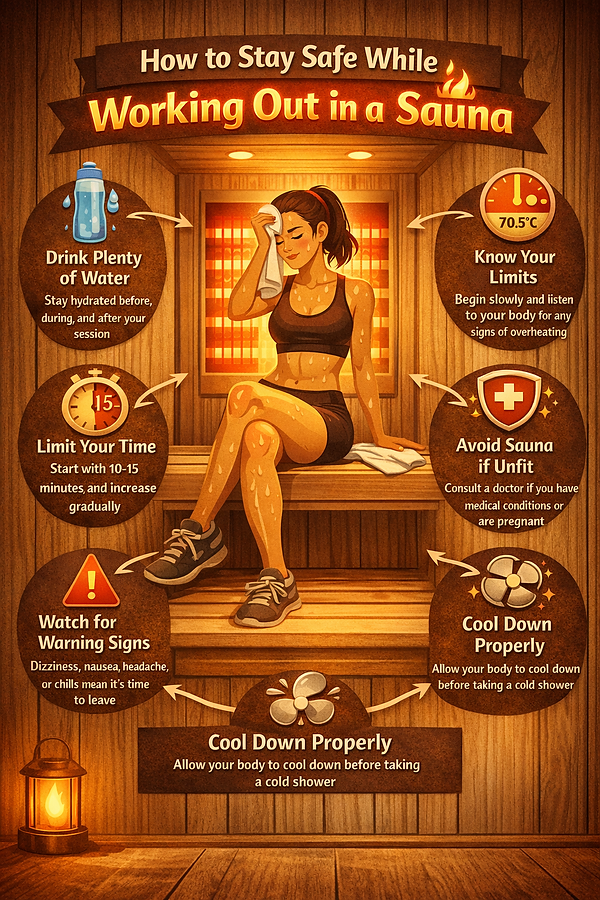
Staying safe in a sauna starts with listening to your body and respecting your limits. Always stay hydrated before and after your session, and avoid going in if you’re feeling dizzy, sick, or overheated. Keep sessions short—especially if you’re new—and step out immediately if you feel lightheaded or uncomfortable. Avoid exercising intensely, drinking alcohol beforehand, or using a sauna when dehydrated, as these can raise your risk of overheating. It is recommended to keep the sauna between 120 and 125 degrees. Wearing light, breathable clothing, sitting on a clean surface, and allowing time to cool down afterward also help keep the experience safe and enjoyable. With mindful use, saunas can be a relaxing and restorative part of your wellness routine.
WHAT YOU SHOULD KNOW!!!
Working out in a sauna isn’t safe for everyone. Pregnant individuals and people with heart problems or other heat‑sensitive medical conditions should avoid sauna workouts to prevent the risk of overheating or complications.
STAY HYDRATED
Drink plenty of water before, during, and after your sauna session. Since heat makes you sweat more, it’s important to replace lost fluids by sipping water regularly, not all at once. Adding electrolytes—like sodium, potassium, and magnesium—can help replenish minerals your body loses through sweat.
KNOW YOUR LIMITS
Knowing your limits is key to staying safe in a sauna. If you start to feel dizzy, lightheaded, or uncomfortable, step out right away—your body will tell you when it’s time to cool down. Paying attention to early warning signs helps prevent overheating and keeps your experience enjoyable.
RECENT NEWS ARTICLE
Daily infrared sauna use can be safe for most healthy people when done properly, but the article emphasizes that frequency, temperature, and hydration all matter. Infrared saunas warm the body directly using light, creating a gentler heat than traditional saunas, which is why many people consider using them every day. Experts note that regular sessions may support circulation, muscle recovery, and stress relief, but beginners should start slowly with shorter sessions and gradually increase time as their body adapts. The article also highlights that individuals with cardiovascular issues, heat sensitivity, or underlying medical conditions should consult a doctor before using an infrared sauna daily. Proper hydration, moderate temperatures (typically 120–140°F), and 15–30‑minute sessions are recommended to reduce risks and ensure safe, sustainable use.